
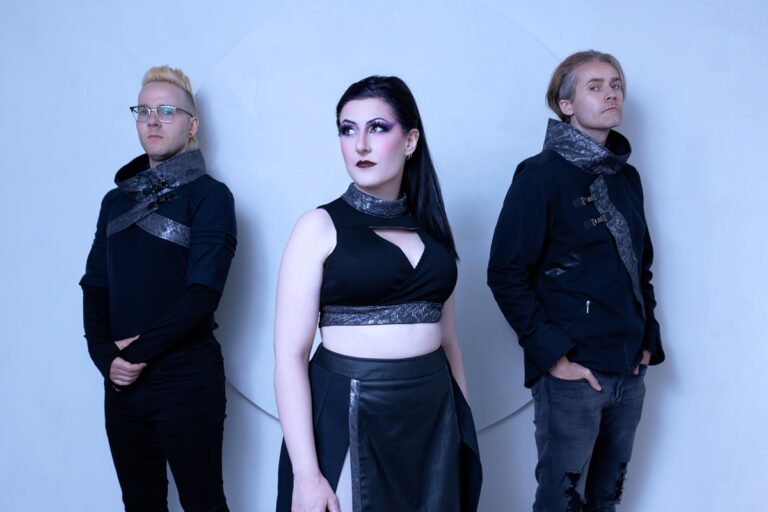

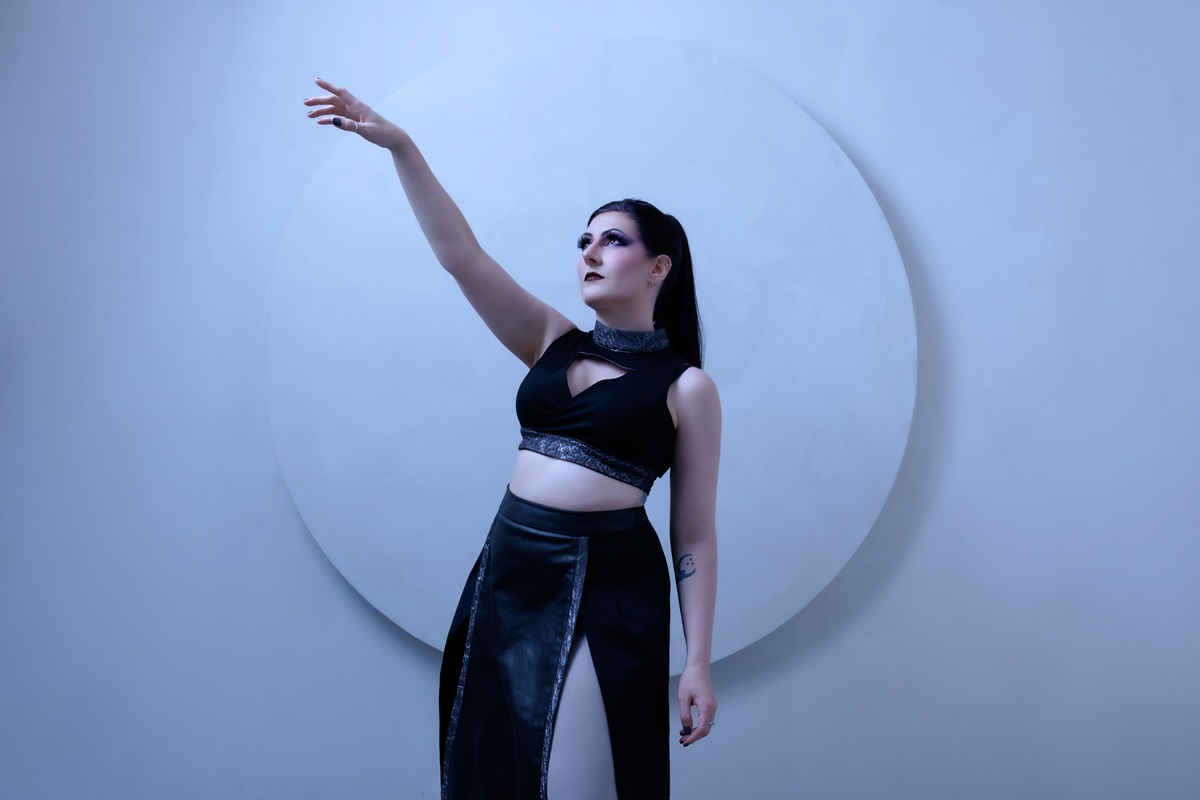
Bridging classical and heavy music like no other, Lindsay Schoolcraft has forged a musical path that is passionate, honest and utterly unique. Here she talks to Gary Trueman about her latest album ‘Harrowing’ and discusses her vocal style and how and why it is growing.
Let’s talk first about your latest album ‘Harrowing’. The title itself says a lot. It’s a beautiful record, and we kind of expected that, knowing the work you put out previously, but it does have a bit of an edge to it as well. It marries quite a number of musical elements seamlessly. It is also deeply personal lyrically. Were you nervous about putting that much of yourself out there?
“Not really, this album took a long time to make. It was being developed for a very long time. I find that as I get older, I just have to say it how it is. I don’t need to hide any more. There is a track on the album called ‘Vague’ and I think it’s quite transparent that everything that needed to be said on this album was needed as a part of my healing journey for what I have been through over the past decade. As you said, there are so many genres blending between the electronic, the classical and the elements of heavy metal; I just didn’t feel like I had to hold back anything lyrically. There were times when I had to revise the lyrics because I could have definitely said things better. Those first drafts were pretty brutal. The writing style that we used on this album was demos that were presented to me. I had to kind of figure out the melodies. The song that came from me was ‘Chase The Dark’, which is the closing track. That was me on the piano, and I did that in five minutes. It came out organically. But when you’re given a song and have to write over it, it takes a minute to get the melody in, and in those melodies you can have some pretty out-there lyrics that don’t make sense. But to answer your question, the short version is I didn’t feel like I needed to hold back on this one at all.”
You did sound confident. Would it be right that you’re in a more confident place now in your own mind?
“Definitely yes. I mean, it was also my first sober album. I wrote my last heavy album ‘Martyr’ when I was not in the best place. It was definitely a coming-of-age thing. I know who I am and I know what I want to do. I did write this album four years ago when I was 36, and now I’m 40, and now I have a completely new set of things to say.”
You could probably say this of many writers, but because of the particularly personal nature of ‘Harrowing’ is what you do a mechanism within your own psyche that drives you to get stuff out there.”
“It’s like a blessing and a curse is the best way I can describe it. I don’t understand why I’ve been given a brain that all of a sudden gets these song ideas and gets really excited about them and has to write them down. I don’t necessarily think that that is something that I had to work on; it’s just been something that has been inside of me my whole life. It’s a calling that you can’t ignore.”
The album has been out for a little while now. What sort of reaction have you had from people listening to it?
“My friends and family are super proud of me. My friends are like Whoa! You went for a really big sound. The response from the industry has been great. I have had a few people message me like, ‘I’m going through a break-up, I’m in a bad situation, and this album is really helping me’. I wasn’t expecting to get those messages so soon because we’re only a little less than a month in for the whole album being out. I think when people hear it from beginning to end, they realise there’s a whole story there. So I thought that response would come once the years out, not so quickly. It shows me that what I was writing about was needed. It is resonating with people; they are getting it. The thing that surprised me, and I regret not making it a single or doing a video, is that people love the song ‘So Alive’. I always thought it was a bit of a weird chimaera because it’s got a really heavy bridge. Krista Shipperbottom came in and did guttural vocals, and it has so many electronics. It’s kind of all over the place, and I didn’t think that people would like it. I thought people might actually be confused by it, but for some reason it’s become everyone’s favourite track.”
It’s interesting that people have messaged you so quickly after the release.
“I was shocked. Right away, the first week, I had a few men but mostly women reach out to me like ’I’m going through a divorce, my ex is a raging narcissist, I really need this album right now to keep me level and to remind me I’m not powerless’. I just wasn’t expecting those messages. Usually, when I release music, people reach out a year later. Those messages are so kind, but to get them within the first month is wild.”
The music is stunning, and, as mentioned earlier, it spans a wide range of genres. You say you write on the piano, but do you have other instruments in mind while you create, or do you think about adding them once you have a basic framework?
“That’s a good question because this album was made out of a place of survival and of needing to keep myself sane. I am someone who, as an artist, will sit down at a piano or the harp and will compose a piece to it. That’s where a lot of my music in the past has come from. But for this album, I had four writers who were presenting these tracks that were like all of the guitar drops. So if that’s already laid down, how do you fit the piano and the harp in? You can get the strings in there because they’re complementary, but sometimes, if you try to force too much, it might be overkill. So instead of drowning it in piano and harp, I took a step back. The piano can be a very sad and serious instrument, so you hear it throughout; you hear it in ‘Vague’.
But the harp unfortunately didn’t get to make as much of an appearance. It’s an instrument that’s known to be dreamy, sad and happy. I did sneak it in on the single before this album called ‘Lighthouse’ because it’s a song about mermaids dragging men to their deaths. Of course you’re gonna have a harp in there… duh! It’s necessary. Moving forward, I do enjoy sitting down and writing a full piano or harp piece and then bringing the band to it. Something I said to Cody, our guitarist, was that I’m going to bring you a lot of these tracks; be ready. We’re co-producing the next album together. I’m kinda going back to what I did on my very first EP. I prefer to write that way. It’s where I bring forward my most dramatic work, and it has a lot more flow for me. I did enjoy writing over the band’s demos. They were challenging, and they were necessary because I was struggling to find time to make music for the last four years. But moving forward, I’m going to tap back into that classical composer in me and really build something from the ground up.”
We have to talk about your vocals too. They seem to be, even within the album’s blend of genres, still ethereal at their very heart. Your voice on this record seems warmer and more mature. Is that something you’ve deliberately worked on, or is it more just happening naturally?
“It’s just mid-life ha-ha! I’m one of those artists, and I’ve heard Devin Townsend say it; I’m sick of my own voice. I completely understand that because you have to hear yourself talk all day and it’s the only voice you’ve got. You’ve got to sing with it; you’ve got to treat it like an instrument, and it’s something you can’t escape. For the longest time, I felt like, I guess there’s more oestrogen in my body- I felt like I sounded like a little kid. I felt it was something that wasn’t taken very seriously. Then, when I started working with my supergroup Antigva, they were asking me to explore a darker side of my voice, which was cool. In my previous bands, I was never asked to do anything like that, so it was like thanks for showing me something I would otherwise have never found by being pushed out of my comfort zone. Because of that, I like the lower, darker tone in my voice. Now that I’m older and my hormones have changed, I can really access that part of my voice. So that’s what naturally showed up on this album, but it had to be belted, and it had to be powerful because you’re competing against the band. So, I guess you could say it’s a natural progression, but it’s also the journey as a vocalist. Getting old is something else!”
You mentioned belts. Your belts on the album are still crisp and controlled, though they’re not forced. They’re honed beautifully. You said you can go deeper, lower. Do you find that if you’re performing older material, some of the stuff in the higher register is harder to hit now?
“I was worried about that because I’d heard if it’s going lower, it’s going to come down on the high end. I’ve been doing so much work lately tracking these vocals, and we had a show, and I had to prepare for that. I had to sing songs like ‘Saviour’, which has a high note in the chorus. I thought I might lose that higher register. I started warming up and working on everything, and it’s oh no – she’s still there. I really settled into, I’d say, the lower half of an octave where my range has really filled out and is really jazzy, and I like it. It’s fun. Let’s take ‘Saviour’ as an example. In the verses, there are all these low notes. I did these over ten years ago, and I was doing a low, speaking voice because at that time I couldn’t access that lower, chesty, bassy register. When I started performing it again in rehearsals and did it live, I could actually fill out those low notes. I think it made it sound a little bit sassier and darker. It’s been cool to see how my voice is ageing. I am so grateful that I haven’t lost any of my high register. She’s still all there.”
You also mentioned Krista Shipperbottom and the track ‘So Alive’ she features on. She really opens that song up, doesn’t she, giving a contrasting vocal style? Having heard and seen how successful that song has already been, would you look to do similar collaborations in the future?
“Totally. She had to be right on it. She has such a unique vocal style. There are so many singers out there who do guttural, fry and a clean voice, but with Krista, she does her fry so well; she’s in a higher register, and she has this soaring high belting voice that she’s used in her power metal type projects in the past. She’s also a dear friend and went through something similar to what the story of this album talks about, so she made the most sense. Can I do what she does? No. I can do the low death metal thing, but I cannot do what she can do, and that’s why I’m glad she came on board. She’s one in a million when it comes to her range and her style. I think that’s why she made that track so special. The metal world loves a good screamer!”
It certainly does. The thing is, she does what she does in a healthy way, too, even in that higher range. It’s pretty unusual.
“Yeah, it’s cool. I’ve known Krista for a long time, and I know she used to do the lows but got worn out. She then embraced that she had to do the higher fry and screams, and she does it so well. When she first tracked the vocals, it was amazing.”
Our music preferences, what we listen to, tend to change over the years. We get to listen to new artists. Does that change in what you listen to affect your writing because of the different influences that new music has on you?
“Yes, definitely, thinking about what I used to listen to 20, 15, 10 years ago to now is completely different. I feel that if I just listen to the same genre that I’m in, I’d get uninspired. Everything would feel stagnant. That’s no disrespect to symphonic metal. I was raised with it, and it’s the reason I like doing heavy music that has orchestration in it. Music is such a magical thing. There’s no end to it. You can always be learning; there will always be new beautiful things alchemised and brought down here to earth for us to listen to, and that’s amazing. Even though 20 years ago I was listening to nu metal and then fully transitioned into symphonic metal, I was always listening to trip hop, and I have a big love for EDM. I love a lot of pop music. There’s always been something else there to remind me that this isn’t all there is. And like metal alone has so many sub-genres, it’s crazy. You can be digging for years and still find stuff you didn’t know was possible.
Now, I am a huge fan of Spiritbox. I like a little bit of metalcore, but not a ton of it. I like people who push the envelope and try new things but also keep it kind of prog. For the past ten years, I’ve been enveloped in witch house, which is its own form of electronic music. You can hear a little bit of that influence on the last album. I think it’s important to keep exploring and searching and looking for things that inspire you and makes you brain feel good. I feel like I’m a classical musician who got sucked into heavy metal and won’t let me go. I think if you’re a lover of music, every genre and every decade and every band can teach you something. Through listening to all these other artists, whatever they may be, whatever genre, they’ve shown me the sounds I want to make. Going into writing the next album, I know exactly what I want to take from trip hop, witch house, classical music and heavy metal. If you think I’ve been confident on ‘The Harrowing’ I’m way more confident on this next one.”
We have to mention touring, and in particular, any plans for the UK? It’s tough out there at the moment, isn’t it?
“We want to come back so bad. Everything has been very expensive this year. We did put out the feelers and ask around. There was supposed to be something later this year, but it got dropped because we were all going to come home heavily in the red and that’s never good. I think it’s something everyone is going through, but no one is talking about it because they’re too embarrassed, which they shouldn’t be. It’s like a silent monster throughout the whole industry. People are coming back from tour looking for ways to make up money because they didn’t break even. We should be talking about what dire straits everyone is in right now. We just want to play it safe because it would be really silly to put myself into a mountain of debt. Obviously, I want to go back, but when it makes sense for us. We are hoping to get there in 2027, and by then we’ll have two new albums.”
Staying on the classical theme, Mozart in his day was a bit wild, a bit of a rock star, as were many others. Do you think heavy metal will be viewed similarly in a couple of hundred or so years’ time as classical is now?
“I think so because if you look into it, I think it was Bach who broke into the wine cellars (of a church) to steal the wine. I think he married his cousin. Very Jerry Lee Lewis of him. I think because we’re in a time of keeping track of everything, there’s going to be more lore. I think they’ll look back at the time of heavy metal and be like these guys were nuts. And we have way more evidence of it. A lot has been lost from history from 300 years ago from the classical composers. I like learning that Bach had a big personality and that Beethoven was a grumpy old man. Rightfully so, he lost his hearing. Don’t come at me saying you need AI to make art when Beethoven was deaf and still finished his pieces. My favourite composer is Tchaikovsky. His story is beautiful. I could do a whole dissertation on him. His life story- and when you listen to his music, you hear that pain, and it’s beautiful. I love that. He’s a hopeless romantic of that time, and I hope to see the hopeless romantic of heavy metal. He’s my inspiration.
https://www.facebook.com/schoolcraftofficial
Interview by Gary Trueman
Photos by Andrea Hunter